Modern Migration Visa

Blog

Your blog category

Cultural Exchange Benefits_ Enriching Lives Through Migration

Cultural Exchange Benefits: Enriching Lives Through Migration

In our interconnected world, migration is not merely a change of location; it’s a transformative journey that transcends borders, bringing about a profound exchange of cultures and ideas. Modern migration visas have emerged as gateways to new horizons, facilitating not just the movement of individuals but the blending of diverse cultural landscapes. In this blog post, we delve into the significance of cultural exchange in the context of migration, exploring how it enriches lives and contributes to the vibrancy of our global community. Introduction Migration is a tapestry woven with the threads of diverse cultures, and at the heart of this tapestry lies the concept of cultural exchange. In today’s dynamic world, the benefits of cultural exchange through migration extend far beyond the mere relocation of individuals. Modern migration visas open doors to a world where the richness of cultural diversity becomes a catalyst for personal and societal growth. Understanding Cultural Exchange Through Migration Cultural exchange is a two-way street, a reciprocal process where individuals from different backgrounds come together to share, learn, and grow. Modern migration visas, designed to emphasize broader criteria such as skills, innovation, and entrepreneurship, inherently foster this exchange. When individuals migrate, they carry with them not just their possessions but also their unique traditions, languages, and perspectives. As they settle in new territories, they become integral contributors to the cultural mosaic of their host countries. Simultaneously, they immerse themselves in the local culture, learning, adapting, and creating a harmonious blend that enriches both their lives and the communities they join. Breaking Down Cultural Barriers One of the primary benefits of cultural exchange through migration is the breaking down of barriers that separate communities. As people interact and share their customs, festivals, and daily practices, stereotypes are dismantled, and understanding deepens. The result is a more tolerant and inclusive society where diversity is celebrated, not feared. Modern migration visas play a pivotal role in this process by encouraging individuals with different cultural backgrounds to coexist. By promoting open-mindedness and acceptance, these visas contribute to the formation of cohesive and resilient communities. Economic and Social Enrichment Cultural exchange isn’t confined to festivals and traditions; it extends to the very fabric of society, including its economic and social aspects. Migrants bring with them a wealth of skills, knowledge, and work ethic that contribute to the host country’s economic growth. In return, they gain access to new opportunities, broadening their own horizons. The exchange of ideas in workplaces and educational institutions fosters innovation and creativity. A diverse workforce or student body brings a spectrum of perspectives, problem-solving approaches, and collaborative skills, creating an environment where everyone benefits. Preserving Cultural Heritage Migration is not about abandoning one’s roots but rather carrying them forward to new landscapes. Modern migration visas ensure that individuals can maintain a strong connection with their cultural heritage while embracing the opportunities offered by their host country. This preservation of cultural identity is vital for creating a tapestry of diverse communities within a nation. It fosters a sense of belonging among migrants, instilling pride in their cultural heritage and contributing to the overall cultural richness of the host country. Educational and Personal Growth For students pursuing education through modern migration visas, the benefits of cultural exchange are particularly profound. Exposure to different educational systems, teaching methodologies, and diverse perspectives enhances their academic experience. Moreover, living in a multicultural environment cultivates crucial life skills such as adaptability, communication, and a global mindset. These skills are not only essential for personal growth but also highly valued in an increasingly interconnected world. Overcoming Challenges Through Unity Cultural exchange through migration is not without its challenges. Language barriers, societal prejudices, and the fear of the unknown can pose obstacles. However, these challenges, when approached with an open heart and mind, become opportunities for growth and understanding. Modern migration visas aim to address these challenges by providing support systems and resources to help individuals integrate seamlessly into their new communities. From language courses to cultural orientation programs, these visas facilitate a smoother transition, ensuring that the benefits of cultural exchange are maximized. Conclusion In the grand tapestry of migration, cultural exchange is the vibrant thread that weaves together the stories of diverse individuals. Modern migration visas, by emphasizing the broader criteria of skills and innovation, actively promote this exchange, recognizing its profound impact on individuals and societies. As we celebrate the benefits of cultural exchange through migration, let us embrace the idea that, in our interconnected world, the fusion of cultures enriches us all. The diversity that migration brings is not a challenge to be overcome but a gift to be cherished—a testament to the strength that arises when individuals, regardless of their origins, come together in unity. Through modern migration visas, we embark on a collective journey toward a more harmonious and culturally enriched world.

Cultural Exchange Benefits: Enriching Lives Through Migration Read More »
Diversity in Destination_ Choosing the Right Country for Migration

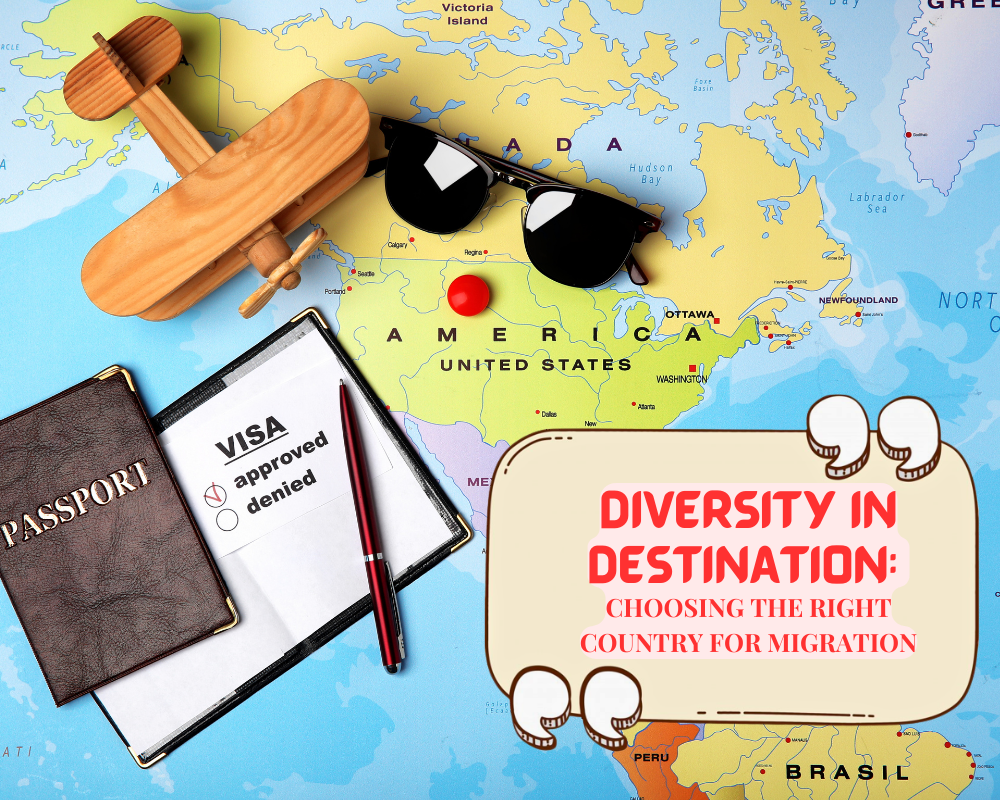
Diversity in Destination: Choosing the Right Country for Migration

In today’s interconnected world, the prospect of migration opens up a myriad of opportunities for individuals seeking new horizons. Choosing the right destination is a crucial step in the migration process, as it can significantly impact your personal and professional life. This blog explores the importance of diversity in destination selection and provides practical insights to guide you through the decision-making process. Understanding the Significance of Destination Diversity Migration is not a one-size-fits-all journey. The world is a tapestry of cultures, economies, and opportunities, and selecting the right destination involves considering a variety of factors. Diversity in destination goes beyond just geographic locations; it encompasses cultural richness, economic stability, job opportunities, and quality of life. 1. Cultural Richness: Embracing Diversity One of the most enriching aspects of migration is the exposure to diverse cultures. Choosing a destination with a rich cultural tapestry provides an opportunity to broaden your horizons, learn new languages, and immerse yourself in traditions that differ from your own. Consider destinations that celebrate diversity, fostering an environment where individuals from various backgrounds coexist harmoniously. 2. Economic Stability: Building Your Future Economic stability is a crucial factor in determining the success of your migration journey. Research countries with robust economies that offer a favorable job market and opportunities for career growth. Assess the cost of living, average wages, and economic prospects to ensure that your chosen destination aligns with your financial goals and aspirations. 3. Job Opportunities: Fueling Your Career For many migrants, job opportunities are a primary motivator for relocation. Choose a destination that aligns with your professional expertise and offers a thriving job market in your industry. Investigate sectors that are in high demand, and explore countries that actively welcome skilled professionals, entrepreneurs, and innovators. 4. Quality of Life: Balancing Work and Well-being Migration is not solely about work; it’s about building a life in a new environment. Evaluate the quality of life in potential destinations, considering factors such as healthcare, education, safety, and overall well-being. Look for countries that prioritize a healthy work-life balance and offer a supportive environment for individuals and families. Practical Tips for Destination Decision-making Now that we’ve explored the importance of diversity in destination selection, let’s delve into practical tips to help you make an informed decision: 1. Define Your Priorities: Start by clearly defining your priorities. What aspects of a destination are most important to you? Whether it’s career growth, cultural experiences, or quality of life, having a clear understanding of your priorities will guide your decision-making process. 2. Research Extensively: Arm yourself with information. Research potential destinations extensively, considering not only official statistics but also personal anecdotes and experiences shared by other migrants. Online forums, expat groups, and testimonials can provide valuable insights into the day-to-day realities of living in a particular country. 3. Seek Professional Guidance: Engage the services of migration consultants or professionals who specialize in the destination of your choice. They can provide personalized advice, navigate the intricacies of immigration processes, and offer insights that might not be readily available through public sources. 4. Consider Long-Term Prospects: Think beyond the immediate future. Consider the long-term prospects of your chosen destination. Is it a place where you can envision building a fulfilling career and a happy life? Anticipate how your chosen location aligns with your goals for the next five, ten, or even twenty years. 5. Attend Networking Events: Participate in networking events and gatherings that connect migrants and expatriates. These events provide an opportunity to interact with individuals who have firsthand experience in your potential destination, offering valuable advice and establishing a support network before you even arrive. 6. Evaluate Immigration Policies: Stay informed about the immigration policies of potential destinations. Policies can vary significantly, affecting your eligibility and the ease with which you can settle in a new country. Choose a destination with immigration policies that align with your circumstances and goals. Conclusion: Your Path to a Diverse Future Choosing the right destination for migration is a pivotal decision that sets the stage for your future. Embrace the diversity of opportunities available worldwide, considering cultural richness, economic stability, job opportunities, and quality of life. By defining your priorities, conducting thorough research, seeking professional guidance, and considering long-term prospects, you can embark on a migration journey that aligns with your aspirations. Remember, your path to a diverse future begins with a well-informed decision. Whether you’re seeking new opportunities, reuniting with family, or expanding your business internationally, the right destination is the key to unlocking the full potential of your migration journey. Good luck on your path to a diverse and fulfilling future!

Diversity in Destination: Choosing the Right Country for Migration Read More »

Tips for a Successful Modern Migration Visa Application

Tips for a Successful Modern Migration Visa Application

In an era of global connectivity, the pursuit of opportunities beyond borders has become a common aspiration for many individuals and families. Modern migration visas offer a pathway to realizing these dreams, providing a streamlined approach to relocation. Navigating the application process successfully requires a strategic and well-informed approach. In this guide, we will explore valuable tips to enhance your chances of a successful modern migration visa application. Understanding the Basics: Choose the Right Visa Category One of the fundamental steps in the modern migration journey is identifying the most suitable visa category. Countries offering modern migration visas often have diverse options catering to different purposes, such as skilled migration, family reunification, or business expansion. Conduct thorough research to align your goals with the appropriate visa category, ensuring that you meet the eligibility criteria. Begin with a Comprehensive Eligibility Assessment Before diving into the application process, it’s crucial to assess your eligibility thoroughly. Many immigration authorities provide online tools or checklists to help applicants understand the requirements. By conducting a preliminary assessment, you can identify any potential challenges and address them proactively. This step lays the foundation for a smoother application process. Gather and Organize Supporting Documents Document preparation is a critical aspect of any visa application. Compile all necessary supporting documents, including identification, educational qualifications, work experience certificates, and financial statements. Ensure that these documents are up-to-date and organized in accordance with the specific requirements of the visa category you are applying for. Adhere to Timelines: Plan Ahead Modern migration visa applications often follow specific timelines. Plan your application well in advance to avoid last-minute rush and potential delays. Research processing times and submission deadlines, and create a timeline that allows for thorough preparation and review before submission. Seek Professional Guidance: Consult with Immigration Experts Navigating the complexities of immigration laws and procedures can be challenging. Seeking guidance from qualified immigration consultants or agents can significantly enhance your chances of success. These professionals are well-versed in the intricacies of the process and can provide personalized advice based on your unique circumstances. Craft a Compelling Personal Statement The personal statement or cover letter is your opportunity to present a compelling case to immigration authorities. Clearly articulate your intentions, highlighting how your skills, experience, and aspirations align with the objectives of the migration program. Keep the language concise, sincere, and focused on your unique contributions. Proofread Thoroughly: Attention to Detail Matters A seemingly minor error in your application can have significant consequences. Thoroughly proofread all documents and information before submission. Pay attention to details such as dates, names, and addresses. Consistency and accuracy demonstrate professionalism and attention to detail, positively influencing the perception of your application. Undergo Health Checks and Obtain Necessary Certifications Many modern migration programs require health assessments and specific certifications. Attend to these requirements promptly to avoid delays in processing. Obtain the necessary medical examinations and certifications from approved professionals and institutions, ensuring compliance with the health standards of the destination country. Demonstrate Financial Capability: Prepare Adequate Funds Financial stability is a key consideration for many migration programs. Clearly demonstrate your financial capability to support yourself and your dependents during the initial stages of migration. Provide accurate financial statements and proof of funds, adhering to the specified requirements of the immigration authorities. Stay Informed: Monitor Updates and Changes Immigration policies and procedures are subject to change. Stay informed about any updates or changes in the migration landscape. Regularly check the official website of the immigration authority or subscribe to newsletters for the latest information. Being aware of changes allows you to adapt your application strategy accordingly. Prepare for Interviews and Language Proficiency Tests Some modern migration programs may include interviews or language proficiency tests as part of the assessment process. Prepare thoroughly for such requirements by practicing common interview questions and enhancing language skills if necessary. Adequate preparation instills confidence and positively influences the outcome of these assessments. Submit a Complete Application: Quality Over Quantity When submitting your application, prioritize quality over quantity. Ensure that all required documents are included, and information is accurate. A well-organized and complete application reflects your commitment to the process and improves the efficiency of the assessment. Maintain Open Communication: Respond to Queries Promptly In some cases, immigration authorities may seek additional information or clarification during the assessment process. Maintain open communication and respond to queries promptly. A timely and cooperative approach can facilitate a smoother evaluation of your application. Track Your Application Progress: Utilize Online Tools Take advantage of online tracking tools provided by immigration authorities. These tools allow you to monitor the progress of your application and receive updates on its status. Regularly check for any requests or notifications and respond promptly to ensure a proactive approach to the assessment process. Conclusion: Your Journey Begins with Preparation Embarking on a modern migration journey is a transformative experience that begins with a successful visa application. By understanding the nuances of the process, preparing meticulously, and staying informed, you can navigate the complexities with confidence. Remember, each application is a unique story, and by following these tips, you are better positioned to script a successful chapter in your migration journey. YOUR DREAM DESTINATION AWAITS. START YOUR JOURNEY TODAY!

Tips for a Successful Modern Migration Visa Application Read More »

Making a Smooth Transition MMV

Making a Smooth Transition: Tips for Cultural Integration in Your New Homeland

Moving to a new country can be an exciting yet challenging experience. Alongside the logistical hurdles of modern migration, the process of adjusting to a new culture and environment can present its own set of unique challenges. Cultural integration plays a pivotal role in ensuring a seamless transition and fostering a sense of belonging in your new homeland. By embracing the local customs, traditions, and social norms, you can enrich your experience and establish meaningful connections within the community. Here are some practical tips to help you navigate the cultural landscape and facilitate a smoother transition into your new life abroad. 1. Embrace Cultural Awareness and Sensitivity:    Developing an understanding of the cultural nuances and social etiquettes of your new homeland is essential. Engage in local events, festivals, and traditions to immerse yourself in the cultural tapestry. Respect local customs and traditions, and demonstrate a willingness to learn from and adapt to the cultural differences. 2. Learn the Language:    Language is a bridge that connects individuals and communities. Invest time and effort in learning the local language to effectively communicate and build meaningful relationships with the locals. Enroll in language classes, practice conversational skills with native speakers, and explore language exchange programs to enhance your language proficiency. 3. Cultivate a Supportive Network:    Building a strong social network can provide you with the necessary support and guidance during your cultural integration journey. Connect with local expat communities, join social clubs, and participate in community events to expand your social circle. Networking with like-minded individuals can offer valuable insights and help you navigate the challenges of settling into a new cultural environment. 4. Adapt to Social Norms and Values:    Familiarize yourself with the social norms, values, and behavioral expectations prevalent in your new society. Respect cultural sensitivities, observe social protocols, and adhere to local customs to demonstrate your commitment to assimilating into the community. Displaying cultural sensitivity fosters mutual respect and facilitates a smoother integration process. 5. Explore Local Cuisine and Lifestyle:    Indulge in the local cuisine and embrace the culinary delights that reflect the cultural diversity of your new homeland. Explore traditional dishes, visit local markets, and dine at authentic eateries to develop a deeper appreciation for the local lifestyle. Engaging in culinary experiences can be a gateway to understanding the cultural heritage and gastronomic traditions of your host country. 6. Immerse Yourself in the Arts and Culture:    Immerse yourself in the artistic and cultural expressions that define the identity of your new homeland. Attend theater performances, visit museums, and explore art galleries to gain insights into the historical and contemporary artistic endeavors of the local community. Participate in cultural workshops and events to foster a deeper connection with the cultural fabric of your new environment. 7. Seek Professional Cultural Integration Support:    Consider seeking the assistance of professional cultural integration specialists or advisors who can provide tailored guidance and support in navigating the cultural intricacies of your new homeland. Cultural integration programs and orientation sessions can equip you with the necessary tools and knowledge to adapt effectively to the local culture and society. 8. Maintain Open-mindedness and Flexibility:    Cultivate an open-minded and flexible approach towards embracing cultural differences and adapting to the changing dynamics of your new environment. Embrace diversity, be receptive to new experiences, and demonstrate a willingness to learn and grow from the cultural exchange. Flexibility in your mindset can significantly contribute to a successful cultural integration process. 9. Celebrate Cultural Similarities and Differences:    Acknowledge and celebrate the similarities and differences between your own cultural background and that of your host country. Engage in intercultural dialogues, share your own cultural heritage, and participate in cross-cultural activities to foster a sense of inclusivity and mutual respect within the community. Embracing cultural diversity can enrich your personal growth and contribute to a harmonious integration experience. 10. Patience and Perseverance:     Above all, exercise patience and perseverance throughout your cultural integration journey. Adjusting to a new cultural environment takes time, and overcoming cultural barriers may pose challenges along the way. Maintain a positive outlook, stay resilient in the face of cultural differences, and approach each experience as an opportunity for personal and cultural enrichment. In conclusion, cultural integration is a transformative process that requires an open heart, an inquisitive mind, and a willingness to adapt to new cultural norms. By actively engaging in the local culture, fostering meaningful connections, and demonstrating cultural sensitivity, you can establish a strong sense of belonging in your new homeland. Embrace the richness of cultural diversity, celebrate the shared human experience, and embark on a fulfilling cultural integration journey that enhances your global perspective and enriches your life abroad. Remember, a successful transition into a new cultural environment is not just about adapting to a new way of life; it’s about embracing the beauty of cultural diversity and fostering a sense of unity within a global community.

Making a Smooth Transition: Tips for Cultural Integration in Your New Homeland Read More »

5 Key Benefits MMV

5 Key Benefits of Choosing a Modern Migration Visa for International Career Growth

In today’s interconnected world, the pursuit of an international career has become increasingly appealing. With the rapid globalization of industries and the borderless nature of business, individuals seeking to expand their professional horizons are turning to modern migration visas as a gateway to new opportunities. These visas not only offer a streamlined pathway for international mobility but also provide several distinct advantages for career growth and personal development. Here, we explore five key benefits that highlight why opting for a modern migration visa could be the catalyst for your international career aspirations. 1. Global Networking and Exposure One of the most significant advantages of choosing a modern migration visa for international career growth is the exposure to a global network of professionals and industries. By immersing oneself in a new cultural and professional environment, individuals can build valuable connections and relationships that transcend geographical boundaries. These connections can open doors to new career prospects, collaborations, and business opportunities, ultimately fostering personal and professional growth on an international scale. When considering a modern migration visa, take into account the potential for networking and the wealth of opportunities that await in your chosen destination. Engage with local communities, attend professional events, and leverage social platforms to build a robust network that can propel your career to new heights. 2. Diverse Skill Enhancement Embracing a modern migration visa not only facilitates geographic mobility but also presents an invaluable opportunity for diverse skill enhancement. Exposure to different work cultures, methodologies, and practices fosters adaptability and a broader understanding of global business operations. By working in diverse environments, individuals can acquire a versatile skill set that is highly sought after in today’s competitive job market. To leverage this benefit, actively seek roles and projects that challenge you to adapt and learn new skills. Embrace the diversity of experiences and use them to your advantage, showcasing your adaptability and flexibility as key strengths in your international career journey. 3. Cultural and Linguistic Proficiency Another significant advantage of opting for a modern migration visa is the opportunity to develop cultural and linguistic proficiency. Immersing oneself in a new cultural setting fosters a deeper understanding of societal norms, values, and communication styles. This cultural fluency not only enhances interpersonal relationships but also demonstrates cultural sensitivity, a highly valued trait in international business interactions. Take the initiative to learn the local language and immerse yourself in the cultural nuances of your chosen destination. Understanding cultural subtleties and effectively communicating in the local language can significantly enhance your professional credibility and create a strong rapport with international colleagues and clients. 4. Access to Specialized Opportunities Modern migration visas often provide access to specialized career opportunities that may not be readily available in one’s home country. Certain regions or countries may have a burgeoning industry or a specific sector that aligns with an individual’s professional expertise and aspirations. By pursuing a modern migration visa, individuals can tap into these specialized opportunities, allowing them to contribute their skills and expertise to high-growth sectors and emerging industries. Research and identify regions that align with your professional niche and actively seek out opportunities within these specialized sectors. Position yourself as an expert in your field, highlighting your unique insights and contributions that can drive innovation and growth within these specialized domains. 5. Personal and Professional Development Beyond the tangible benefits, choosing a modern migration visa for international career growth fosters holistic personal and professional development. The experience of navigating a new environment, overcoming challenges, and embracing cultural diversity cultivates resilience, adaptability, and a global mindset. These qualities not only contribute to professional success but also enrich one’s personal life, fostering a deeper appreciation for cultural diversity and global interconnectedness. To maximize your personal and professional development, embrace the journey wholeheartedly. Seek opportunities for personal growth, cultural exploration, and skill enhancement, all of which contribute to a well-rounded and fulfilling international career experience. In conclusion, opting for a modern migration visa presents a plethora of benefits that can significantly impact your international career growth. From global networking and diverse skill enhancement to cultural proficiency and specialized opportunities, the advantages of choosing a modern migration visa extend far beyond professional achievements, enriching both your career and personal life. By embracing these benefits and proactively engaging with your chosen destination, you can pave the way for a successful and fulfilling international career journey. Embark on this transformative experience, and unlock the boundless opportunities that await you in the global landscape.

5 Key Benefits of Choosing a Modern Migration Visa for International Career Growth Read More »

Education Beyond Borders

Education Beyond Borders: Unveiling the Benefits of Studying Abroad Through Modern Migration

In an interconnected world, education transcends boundaries, offering students a chance to explore diverse cultures and gain a global perspective. With the evolution of modern migration, studying abroad has become more accessible and beneficial than ever before. This trend has opened up a world of opportunities for students seeking an enriching educational experience beyond their home countries. In this comprehensive guide, we delve into the multifaceted advantages of studying abroad through modern migration and how it can shape a student’s future in a globalized landscape. The Transformative Power of International Education Studying abroad goes beyond the acquisition of knowledge; it fosters personal growth and cultural awareness. Exposure to different educational systems and environments nurtures adaptability and broadens students’ understanding of diverse perspectives. By immersing themselves in a foreign culture, students develop a deeper appreciation for global interconnectedness and cultivate essential skills that are highly valued in today’s interconnected job market. Bridging Cultures: A Gateway to Cultural Exchange One of the most significant benefits of studying abroad is the opportunity to engage in cultural exchange. Through interactions with local communities and fellow international students, individuals gain invaluable insights into different lifestyles, traditions, and belief systems. This exposure not only enriches their personal experiences but also nurtures a deep understanding of global diversity and empathy—a crucial asset in building a harmonious and interconnected world. Enhanced Academic and Professional Opportunities Studying abroad presents students with an array of academic and professional opportunities that can significantly augment their career prospects. Many renowned educational institutions around the world offer specialized programs, cutting-edge research facilities, and industry-specific internships that provide students with practical exposure and valuable networking opportunities. These experiences not only add a unique dimension to their educational journey but also give them a competitive edge in the global job market. Personal Development and Independence The experience of living and studying in a foreign country fosters personal development and independence. Students learn to navigate new environments, manage challenges, and become more self-reliant. This process cultivates resilience, adaptability, and problem-solving skills, all of which are essential for personal and professional growth. By overcoming cultural and language barriers, students develop a strong sense of confidence and maturity that prepares them to tackle life’s complexities with ease. Overcoming Financial Barriers: The Role of Modern Migration Visa While the prospect of studying abroad may seem financially daunting, the modern migration visa program has made it more feasible for students to pursue their educational aspirations overseas. By offering streamlined and accessible visa processes, this program has created pathways for students to explore international educational opportunities without being burdened by excessive financial constraints. The simplified application procedures and tailored assistance provided by modern migration visa services have made the dream of studying abroad a reality for many deserving students worldwide. Embracing Language Diversity and Communication Skills Studying in a foreign country often necessitates learning a new language or honing language skills. This linguistic immersion enhances students’ communication abilities, making them more proficient in cross-cultural interactions. The ability to communicate effectively in multiple languages not only broadens their career prospects but also enables them to build lasting connections with people from diverse backgrounds, fostering a sense of inclusivity and understanding. Global Networking and Professional Relationships One of the significant advantages of studying abroad is the opportunity to build a global network of peers, mentors, and professionals. Students often collaborate with individuals from different countries and backgrounds, fostering lifelong relationships and international collaborations. These connections not only enrich their academic experiences but also lay the foundation for future professional opportunities and global partnerships, creating a robust support system that transcends geographical boundaries. Navigating the Educational Landscape: Choosing the Right Program Selecting the right educational program and institution is crucial for a successful and fulfilling study-abroad experience. Factors such as academic curriculum, faculty expertise, research opportunities, cultural integration support, and career development resources should be carefully considered. Conducting thorough research and seeking guidance from experienced educational consultants can help students make informed decisions that align with their academic goals and career aspirations. The Role of Intercultural Understanding in Shaping Global Citizens Studying abroad fosters intercultural understanding and promotes the development of global citizens. By embracing diversity and inclusivity, students cultivate a deep sense of empathy and respect for different cultures, fostering a more interconnected and harmonious global community. This understanding plays a pivotal role in addressing global challenges, promoting sustainable development, and building a world that values diversity and equality. Building a Fulfilling Educational Journey with Modern Migration Visa Modern Migration Visa offers comprehensive support and guidance for students aspiring to study abroad. Through personalized consultation, documentation assistance, and streamlined visa application processes, they ensure that students have a smooth and hassle-free transition to their chosen educational destinations. Their expertise and commitment to excellence make the journey of studying abroad an enriching and fulfilling experience for students, empowering them to shape their futures and contribute meaningfully to the global community. Unlocking the Doors to Global Education and Opportunities In conclusion, studying abroad through the modern migration visa program is a transformative experience that opens doors to a world of academic, professional, and personal growth. It fosters cultural exchange, builds global networks, and nurtures a generation of empathetic and globally conscious individuals. With the right guidance and support, students can embark on a journey that not only enriches their educational endeavors but also shapes their perspectives, aspirations, and contributions to a more interconnected and inclusive world. Education beyond borders is not merely a pursuit of knowledge; it is a transformative journey that shapes the leaders and changemakers of tomorrow.

Education Beyond Borders: Unveiling the Benefits of Studying Abroad Through Modern Migration Read More »

5 Big Benefits of Having Permanent Resident Status in Canada

Introduction Canada is often celebrated for its beautiful landscapes, friendly people, and high quality of life. It’s no surprise that countless individuals from around the world dream of becoming Canadian permanent residents. Holding permanent resident status in Canada comes with a plethora of advantages that can significantly impact your life. In this blog, we will explore five of the big benefits that come with this coveted status. One of the most significant advantages of being a Canadian permanent resident is the access to Canada’s world-renowned universal healthcare system. Unlike many countries where healthcare can be costly and inaccessible, Canada’s healthcare system provides essential medical services to all residents, regardless of their financial status. As a permanent resident, you and your family can benefit from medical services, hospital care, doctor visits, and emergency care at no additional cost. This means that you can focus on your health and well-being without worrying about the financial burden of healthcare expenses. Canada’s healthcare system consistently ranks among the best in the world, offering peace of mind and a high standard of care. Canada is known for its excellent educational institutions, from primary schools to post-secondary universities and colleges. As a permanent resident, your children have access to quality education at Canadian schools and universities, often at significantly lower tuition fees compared to international students. Moreover, Canada is a multicultural society with a strong emphasis on diversity and inclusivity. Your children will have the opportunity to study in a diverse and tolerant environment, gaining exposure to different cultures and perspectives. With permanent resident status, you can provide your family with access to a world-class education and a chance to thrive in the competitive global job market. Canadian permanent residents enjoy the same employment opportunities as Canadian citizens. This means you can work in any industry, for any employer, and in any province or territory without needing a work permit. You have the flexibility to switch jobs, pursue career advancements, or start your own business in Canada, all without the constraints often faced by temporary foreign workers. Permanent resident status also allows you to benefit from various government programs and social services designed to support individuals and families during difficult times. These programs include employment insurance, parental leave, and retirement benefits, providing financial security and peace of mind. Canadian permanent residents have a clear pathway to becoming Canadian citizens. After living in Canada for a specified number of years (usually three out of the last five years), you can apply for Canadian citizenship. Gaining citizenship offers additional benefits, such as the right to vote in federal, provincial, and territorial elections, as well as access to certain jobs and security clearances that are reserved for Canadian citizens. Canadian citizenship also opens doors to global travel, as Canadian passport holders have visa-free or visa-on-arrival access to numerous countries, making international travel more accessible and convenient. It’s a significant advantage for those who want to explore the world and maintain a strong connection to Canada. Canada boasts a robust social safety net that aims to protect its residents in times of need. As a permanent resident, you and your family can access social services and programs that provide financial assistance and support in various situations. These may include unemployment benefits, disability benefits, child care support, and subsidized housing. The social safety net ensures that you and your loved ones have a safety cushion to fall back on during challenging periods, offering peace of mind and financial stability. It’s a crucial benefit, particularly in times of economic uncertainty or when unexpected life events occur. Conclusion Obtaining permanent resident status in Canada is a life-changing decision with numerous benefits that extend far beyond these five advantages. Whether it’s access to top-notch healthcare, educational opportunities for your children, the freedom to work and start a business, a pathway to Canadian citizenship, or the peace of mind that comes from the social safety net, Canadian permanent residency offers a high quality of life and a promising future. However, it’s essential to note that maintaining your permanent resident status requires certain responsibilities, such as living in Canada for a specified duration. Be sure to stay informed about the requirements and fulfill your obligations to enjoy these significant benefits to the fullest. Whether you’re seeking a better life for your family or a new beginning for yourself, permanent resident status in Canada can be the key to unlocking a brighter future.

5 Big Benefits of Having Permanent Resident Status in Canada Read More »

A Guide to Applying for a Canada Business Visa from India

Introduction Canada’s thriving economy and diverse market make it an attractive destination for entrepreneurs and business professionals from around the world. If you’re an Indian businessperson looking to explore opportunities in Canada, a Canada Business Visa could be your gateway to success. In this comprehensive guide, we will walk you through the steps to apply for a Canada Business Visa from India. The Canada Business Visa, officially known as the Temporary Resident Visa (TRV), allows Indian businesspeople to visit Canada for short-term business purposes. This visa falls under the Temporary Resident Visa category and is typically issued for a duration of six months. To successfully apply for a Canada Business Visa, you need to meet specific eligibility criteria and follow the application process diligently. Before you begin the application process, ensure that you meet the following eligibility criteria: a. Passport: You must have a valid Indian passport that won’t expire within the duration of your intended stay in Canada. b. Purpose of Travel: You must clearly define the purpose of your visit as a business trip. This may include attending meetings, exploring business opportunities, or negotiating contracts. c. Financial Support: You must demonstrate that you have sufficient funds to cover your travel expenses, including accommodation, meals, and return transportation. d. No Criminal Record: You should not have a criminal record or be a security risk to Canada. e. Ties to India: You must show strong ties to India, such as family, employment, and property, to ensure your return after your visit to Canada. Now, let’s dive into the step-by-step process of applying for a Canada Business Visa from India: Step 1: Determine Visa Type Identify the correct visa type for your business visit to Canada. In most cases, this will be a Temporary Resident Visa (TRV). Step 2: Complete the Application To apply for a Canada Business Visa, you will need to complete the application form IMM 5257. The form can be filled out electronically and should be signed and dated. Ensure that all information is accurate and consistent with your supporting documents. Step 3: Gather Supporting Documents Supporting documents are crucial for your visa application. You will typically need the following: a. Passport-sized photographs meeting specific requirements. b. A valid passport with at least two blank pages for visa stamps. c. Travel itinerary, including flight bookings. d. Proof of funds to cover your expenses in Canada. e. A letter of invitation from the Canadian business or organization you will be visiting, outlining the purpose and duration of your visit. f. Your business ties in India, such as employment letters, property documents, or financial records. g. Any additional documents required for specific visa categories, such as business contracts or trade fair invitations. Step 4: Pay the Visa Fee The visa application fee is non-refundable, so make sure you pay the correct amount and keep the receipt as proof of payment. The fee varies depending on the type of visa and processing time. Step 5: Biometrics Appointment You may be required to provide biometrics, including fingerprints and photographs. If necessary, book a biometrics appointment at the nearest Application Support Center (ASC) or Visa Application Center (VAC). Step 6: Submit Your Application You can submit your application online through the Canada Immigration and Citizenship (CIC) website. Ensure you include all required documents and pay the processing fee. After submission, you will receive a confirmation receipt. Step 7: Attend a Visa Interview In some cases, you may be required to attend an interview at the Canadian Visa Office in India. Be prepared to discuss the purpose of your visit, your ties to India, and your travel plans. Step 8: Wait for Processing Canada Business Visa processing times can vary, so be patient. You can check the status of your application online using the unique tracking number provided in your receipt. When applying for a Canada Business Visa from India, keep the following considerations in mind: a. Visa Processing Times: Processing times can vary depending on the volume of applications, time of year, and your specific case. It’s wise to apply well in advance of your intended travel date. b. Biometrics: Some applicants will be required to provide biometrics. Make sure to schedule your appointment at the designated center promptly. c. Consistency: Ensure that all the information provided in your application form and supporting documents is consistent. Any inconsistencies could lead to delays or rejection. d. Travel Insurance: It’s highly recommended to purchase travel insurance to cover unexpected expenses or medical emergencies during your stay in Canada. e. Medical Examination: While not always necessary, some visa applicants may need to undergo a medical examination. Follow the instructions provided by the Canadian Visa Office, if required. f. Travel and Accommodation: Have a clear travel itinerary and proof of accommodation arrangements. This will help your application and facilitate a smooth entry into Canada. A Canada Business Visa can open doors to numerous opportunities for Indian entrepreneurs and business professionals. By understanding the eligibility criteria and diligently following the application process, you can increase your chances of obtaining a visa to explore the Canadian business landscape. Remember to stay updated on the latest requirements and guidelines, as they can change over time. Good luck with your Canada Business Visa application and your entrepreneurial endeavors in the Great White North!

A Guide to Applying for a Canada Business Visa from India Read More »

Navigating the Path to Canadian Permanent Residency: Understanding Eligibility Criteria for Express Entry

Introduction Canada is renowned for its welcoming and inclusive immigration policies. With a diverse society and a strong economy, it’s no wonder that countless individuals aspire to become permanent residents of the Great White North. The Express Entry system is one of the most popular pathways to achieving this dream. In this blog, we will explore the eligibility criteria for obtaining a Permanent Residency (PR) visa through the Express Entry program in Canada. The Express Entry system is a point-based immigration system that manages the selection of candidates for three primary economic immigration programs: a. Federal Skilled Worker Program (FSWP)b. Federal Skilled Trades Program (FSTP)c. Canadian Experience Class (CEC) Under the Express Entry program, potential immigrants are ranked based on factors such as age, education, work experience, language proficiency, and adaptability. The Comprehensive Ranking System (CRS) is used to determine an individual’s eligibility for an Invitation to Apply (ITA) for Canadian permanent residency. To be considered for a PR visa through Express Entry, you must meet the following eligibility requirements: a. Age: You must be at least 18 years old when you apply for permanent residency. b. Education: You need to have at least a Canadian high school diploma or an equivalent foreign credential. It’s important to have your foreign education credentials assessed by an approved organization. c. Language Proficiency: Demonstrating proficiency in English and/or French is crucial. You will need to take an approved language test, such as IELTS for English or TEF for French, and score a minimum level of proficiency. d. Work Experience: You must have at least one year of full-time skilled work experience in a qualifying occupation within the last ten years. The job must fall under National Occupational Classification (NOC) Skill Type 0, A, or B. e. Proof of Funds: You must demonstrate that you have enough money to support yourself and your family upon arrival in Canada unless you have a valid job offer or are already working in Canada. The CRS is the heart of the Express Entry system. To receive an ITA for permanent residency, you need to score as high as possible in this system. Points are allocated based on factors like age, education, work experience, language skills, and adaptability. The maximum CRS score is 1,200 points. a. Age: The younger you are, the more points you can earn. Applicants between 20-29 years receive the maximum points in this category. b. Education: Points are awarded based on the level of education. Higher degrees typically earn more points. c. Language Proficiency: Your language proficiency in English and/or French is a critical factor. Scoring high in language tests can significantly boost your CRS score. d. Work Experience: The more work experience you have in a NOC Skill Type 0, A, or B occupation, the more CRS points you can earn. e. Job Offers: If you have a valid job offer in Canada, you can gain extra CRS points. This is especially beneficial if the job offer is in a NOC Skill Type 00 occupation. f. Adaptability: Points are awarded for adaptability factors such as having Canadian work experience, education in Canada, a spouse’s language proficiency, or a sibling living in Canada. Provincial Nominee Programs are an essential element of Express Entry. Many provinces and territories in Canada have their own immigration programs designed to attract skilled workers. If you have a provincial nomination, you receive an additional 600 CRS points, virtually guaranteeing an ITA. To be eligible for a PNP nomination, you must meet the specific requirements of the province or territory to which you’re applying. Each program is unique and may target certain occupations, education levels, or work experience. Research and choose a PNP that aligns with your qualifications and goals. Once you’ve entered the Express Entry pool and achieved a competitive CRS score, you may receive an ITA to apply for permanent residency. The ITA is a formal invitation from the Canadian government to submit your application. It’s crucial to have all your documents in order and submit them within the timeframe specified in the ITA, usually 60 days. After receiving an ITA, you’ll need to go through several steps, including: a. Completing an online application through your Express Entry account. b. Providing necessary documents and certificates, such as educational credentials, language test results, and police clearances. c. Undergoing a medical examination and obtaining a police clearance certificate. d. Paying the required application fees. Achieving Canadian permanent residency through the Express Entry system is a goal within reach for many skilled and educated individuals. By meeting the eligibility criteria, optimizing your CRS score, and considering Provincial Nominee Programs, you can enhance your chances of receiving an ITA and fulfilling your dream of becoming a Canadian permanent resident. It’s essential to stay updated on the latest immigration policies, as they can change over time. If you’re considering the Express Entry route to Canadian PR, consult with an immigration expert or legal professional to ensure you’re on the right path towards your Canadian dream.

Navigating the Path to Canadian Permanent Residency: Understanding Eligibility Criteria for Express Entry Read More »

Scroll to Top